
Level Up Your Climbing
Footwork and Smearing
Inside edge / Outside Edge, Pressure, Smearing, Front Point/Toe, Active ankle (high, low)


The sole is divided into sections, the most important being:
Toe: Usually where the big toe lands. The strongest point of the foot.
Outside Edge: The long side of the toe box. More Surface and Grip.
Inside Edge: The short side of the toe box. Better Edge.
Arch: The weakest part of the foot.
Heel: Able to be hooked and pulled on.
Footwork edge orientation is crucial for maximizing grip on footholds depending on the type of foothold and approach.
Outside Edge
Brings the heels closer to the wall, allowing the hips to be closer to the wall.
provides more rubber contact, allowing less effort to be used.

Inside Edge
Provides more rubber contact, allowing for less effort to be used to hold the foothold

Toe
The “power point’ of the shoe. While the strongest point of pressure, it is also the most fatiguing.

Smearing
Smearing uses the surface area of the rubber on the sole to secure the shoe on the wall.
It can be applied on volumes as well as flat walls.
Softer shoes are better at smearing as they allow the rubber to stretch more, allowing it better grip

Low / High Ankle
A Low Ankle will allow for less energy to be used to hold the foot in position and for more of the shoe to contact the wall for improved smears.
A High Ankle will allow for more pressure to be exerted at the power point of the shoe to secure smaller footholds and add more height to the position

Pivots and Flagging
The point around which the object can rotate or turn.
Pivots
There are a lot of moments where changing the side of the foot closest to the wall is required.
For best execution, use the toe of your foot. The ankle angle may matter as a higher angle and smaller toe area may allow for easier rotation.

Flagging
Some pivots may set you off balance and induce a swing. Sticking your leg out to arrest the swing is called Flagging.
Mindful flagging will allow you to pull off tricky pivots without throwing yourself off balance and slipping off the foothold.

Step Throughs and Foot Swaps
Changing Directions and Changing Feet
The Step Through
Requiring accurate footwork. One foot is passed through the front of the other foot. The standing foot pivots on the toe of the shoe, allowing the climber to rotate and face the opposing direction.


The Foot Swap
At times feet must be swapped to find a better position for the next move.
You can wedge one foot below the other, hop between feet or wiggle one on while wiggling the other off.
Feet direction still apply, with the toe being the best area to foot swap.

Heel Hook and Toe Hook
Heel Hooks and Toe Hooks serve different purposes but act on a common principle.
It is often times required to pull on the wall using the foot. This can be done with the heel hook and the toe hook.
While the toe hook serves more as a alternative way to flag aka resist rotating out of position, the heel hook can also act as a way to prepare to a tricky mantle.


Mantles and Gastons
Mantling is the user of the lower limbs to aid in raising the body over and onto another position. Often times the lower limb hooks on via a Heel Hook.
A Gaston’s is to push off of holds, instead of the usual pulling of holds.
In many cases a Mantle composes of a Heel Hook and a traditional arm pull onto a Gaston, completing the move.


The Bicycle and Force Opposition
Locking in with Feet and hands using Contracting and Opposing Forces.
In the case where you have no foot holds near your feet, both the feet can be used to apply compressive pressure to a Jug by pulling with a toe hook, while pressing down with the other foot.
The same effect can be applied in the inverse scenario where both feet are applying opposing pressure within a ‘void’ also known as the void bicycle.


Opposing Forces are crucial for advanced moves.
Locking in using this method can be done with a relatively wide stance but follows the same idea.


Hips over Feet and Scumming
Finding Center of Balance over Feet
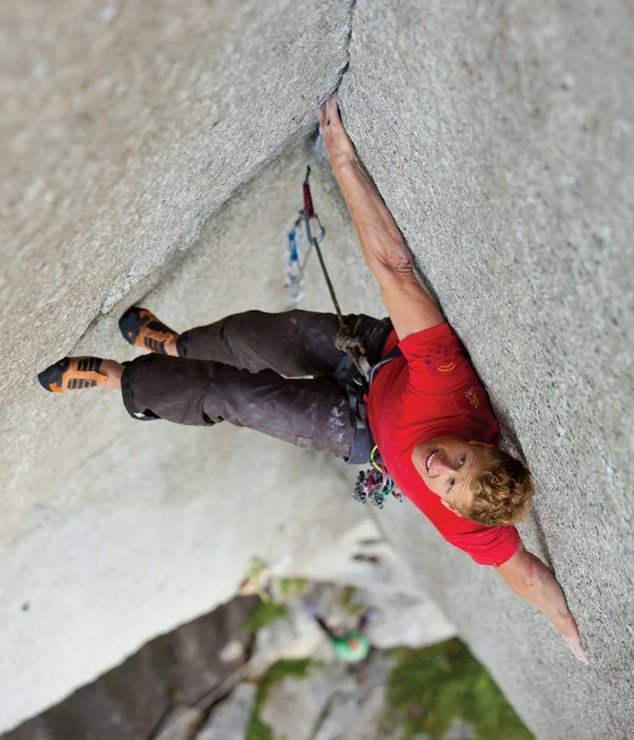
To force a limb into the wall for extra assistance even if marginal.
Optimally, moves center out the hips over feet.
There are moves that may place you out of position but even in those cases the hips eventually find themselves above the feet.
Harder grades see this concept less and less as climbs become more dependent on strength and technique.


Scumming is the additional application of force to aid in climbing using a limb other than hands or feet, such as elbows, shoulders, knees and legs.
Maybe even your head.

Rest and Recovery Positions

The ideal resting positions allow you to take both hands off the wall completely.
At these "no-hands" rests, you can fully recover and stay indefinitely.
When a full no-hands rest isn't available hang with straight arms to engage your skeletal system rather than muscles and use the minimum grip strength needed to maintain your hold
